
The Short Answer
Start with what you can see and where it appeared. A loose coating edge, a raised blister and a crack each give the installer a different place to start. The pattern, installation records and on-site inspection help narrow down the cause.
Peeling, Blisters And Cracks
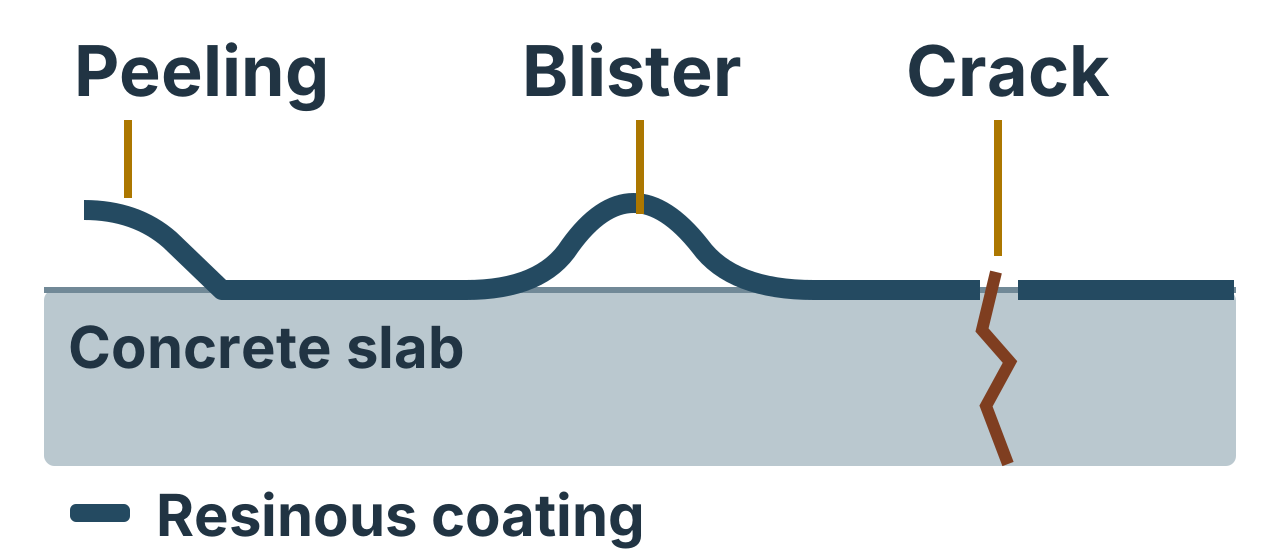
- Peeling. Photograph where a sheet or flake lifts. An installer can check whether separation is between coats, at the concrete surface, or within a weak surface layer.
- Blisters. Note when raised spots appeared and whether they are isolated or spreading. An installer can review moisture conditions and the application history, including whether air escaped from the slab during coating.
- Cracks. Note whether the line follows a joint or continues across the slab. Ask whether the coating alone is affected or whether the joint or concrete needs assessment.
Warehouse Example: Peeling In A Forklift Lane
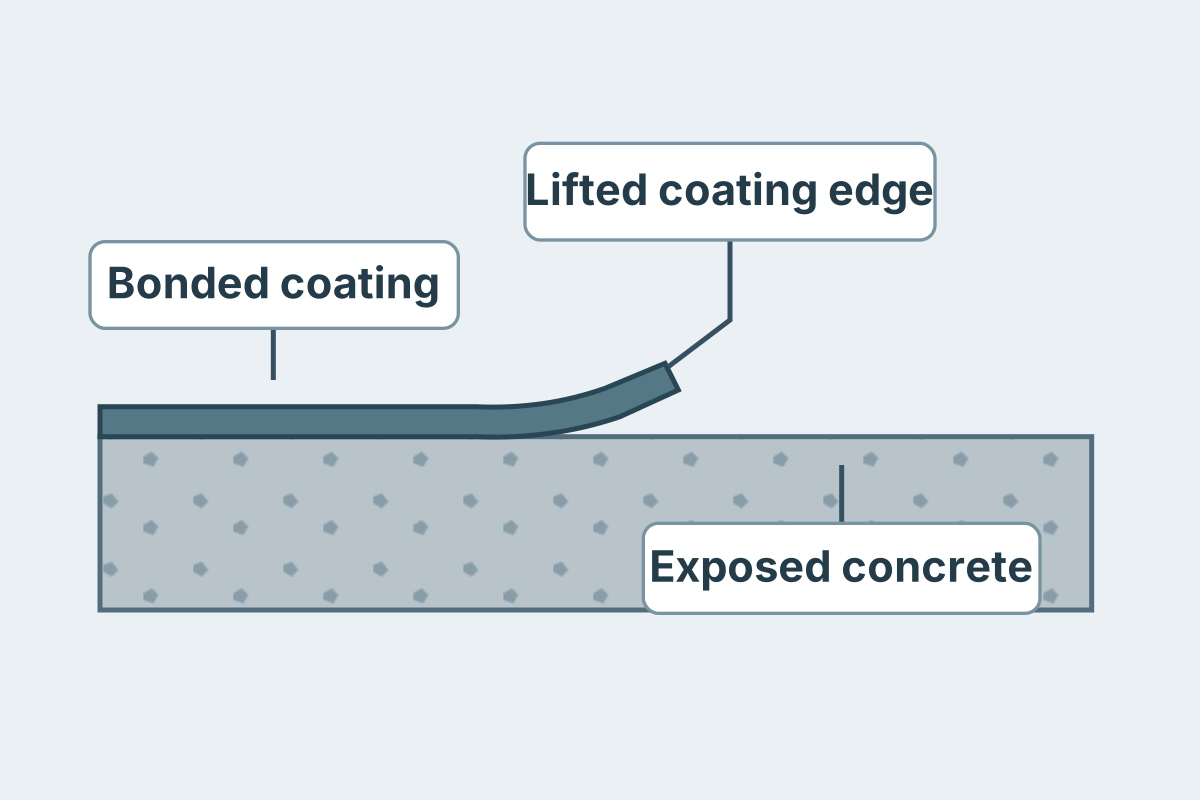
In this teaching example, a coating starts lifting near a loading door where forklifts turn. Photograph the full lane and a close-up of the lifted edge. Mark whether the affected area follows wheel paths, crosses a joint or extends into a quieter part of the floor. Record when it appeared and any recent changes in traffic or cleaning.
The installer would check where the coating separated, how far loose material extends, and what the preparation and return-to-service records show. A confined patch with sound surrounding material might suit a local repair. Repeated peeling across several lanes calls for checking adjacent areas before deciding the repair scope.
Review Concrete Surface PreparationGarage Example: Blisters Near The Door
In this teaching example, raised spots appear near a garage threshold after winter. Take a wide photo showing the threshold and a close-up beside a ruler. Note when the spots appeared, whether they track the tire paths, and when water or meltwater is present.
The installer would check the threshold for water entry, review slab moisture and application records, and examine the surrounding coating. A local repair may make sense if the affected area is limited and the underlying conditions can be addressed. Widespread blisters or ongoing water entry call for a wider assessment before recoating.
Review Concrete Moisture Before EpoxyWhat To Send The Installer
- A wide photo, a close-up with scale, and the location marked on a simple floor sketch.
- The installation date, the date the issue appeared, and whether the area is growing.
- Any recent changes in traffic, cleaning or water exposure, plus the original proposal or system details if available.
Leave raised or loose areas intact for the inspection where possible. If damage creates a trip hazard or affects vehicle travel, flag the area and arrange an assessment.
Technical References
- ACI Guide To Slabs Receiving Moisture-Sensitive Flooring
- ICRI Guide To Specifying Concrete Surface Preparation
- Euclid Chemical Bulletin On Concrete Outgassing
- ACI Reference On Concrete Cracking