
The Short Answer
Start with the surface profile and substrate condition the flooring system requires. Choose the equipment and tooling that can achieve that result in the actual space.
How The Methods Work
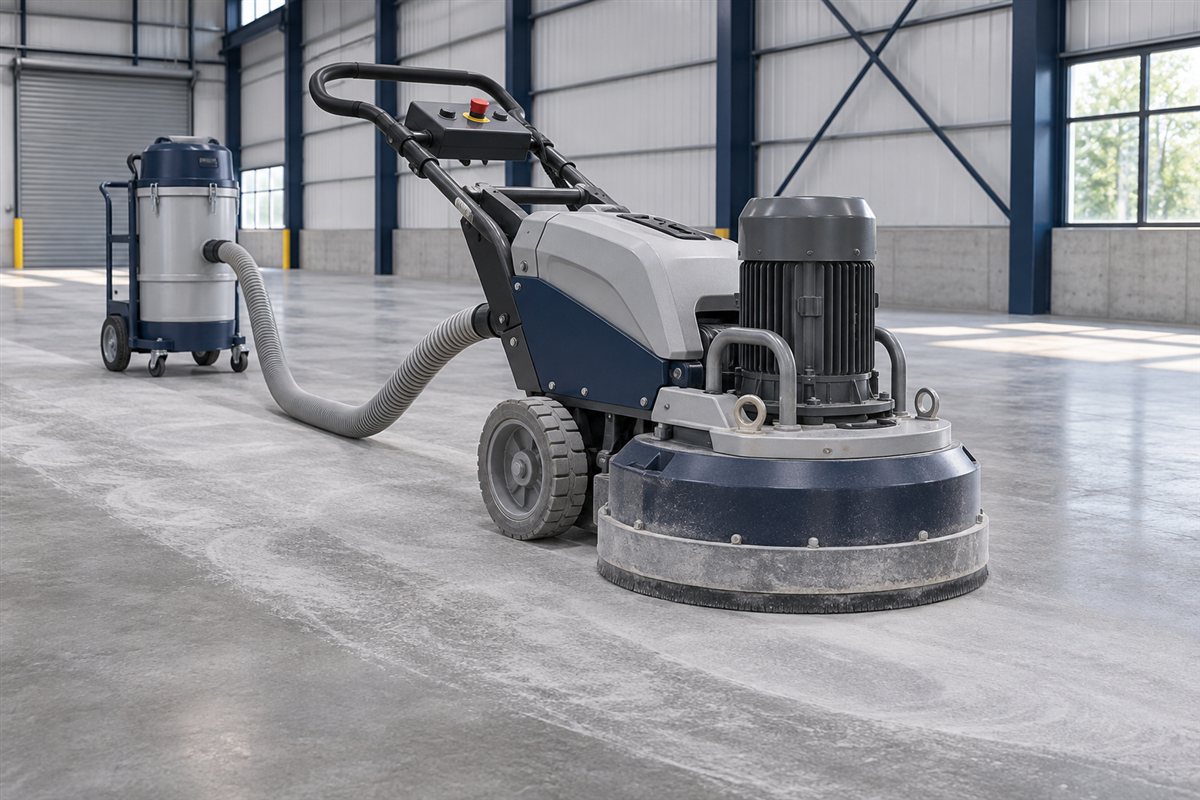
Diamond Grinding
Rotating diamond tooling abrades the slab. Tooling choice and machine setup affect whether the work removes a coating, cuts back a high spot or opens the surface. Smaller grinders can reach edges and other areas where a large machine cannot fit.
Shot Blasting
A wheel propels steel shot against the concrete. The machine collects reusable shot and debris through its recovery system. A walk-behind unit can profile open runs efficiently. Edges and tight corners often need separate treatment.
What Does The Specification Ask For?
Concrete surface profile (CSP) describes the texture of the prepared surface. ICRI publishes reference profiles. Ask which profile the selected primer or system requires and how the contractor will check it. The machine name alone tells you little about the result on your slab.
Ask how they will handle existing coatings, contaminated spots, edges and transitions. Some thick or hard coatings need separate removal. Where material or slab condition is uncertain, a trial area can help confirm the approach. Confirm the dust collection and work-zone controls with the installer.
Project Example
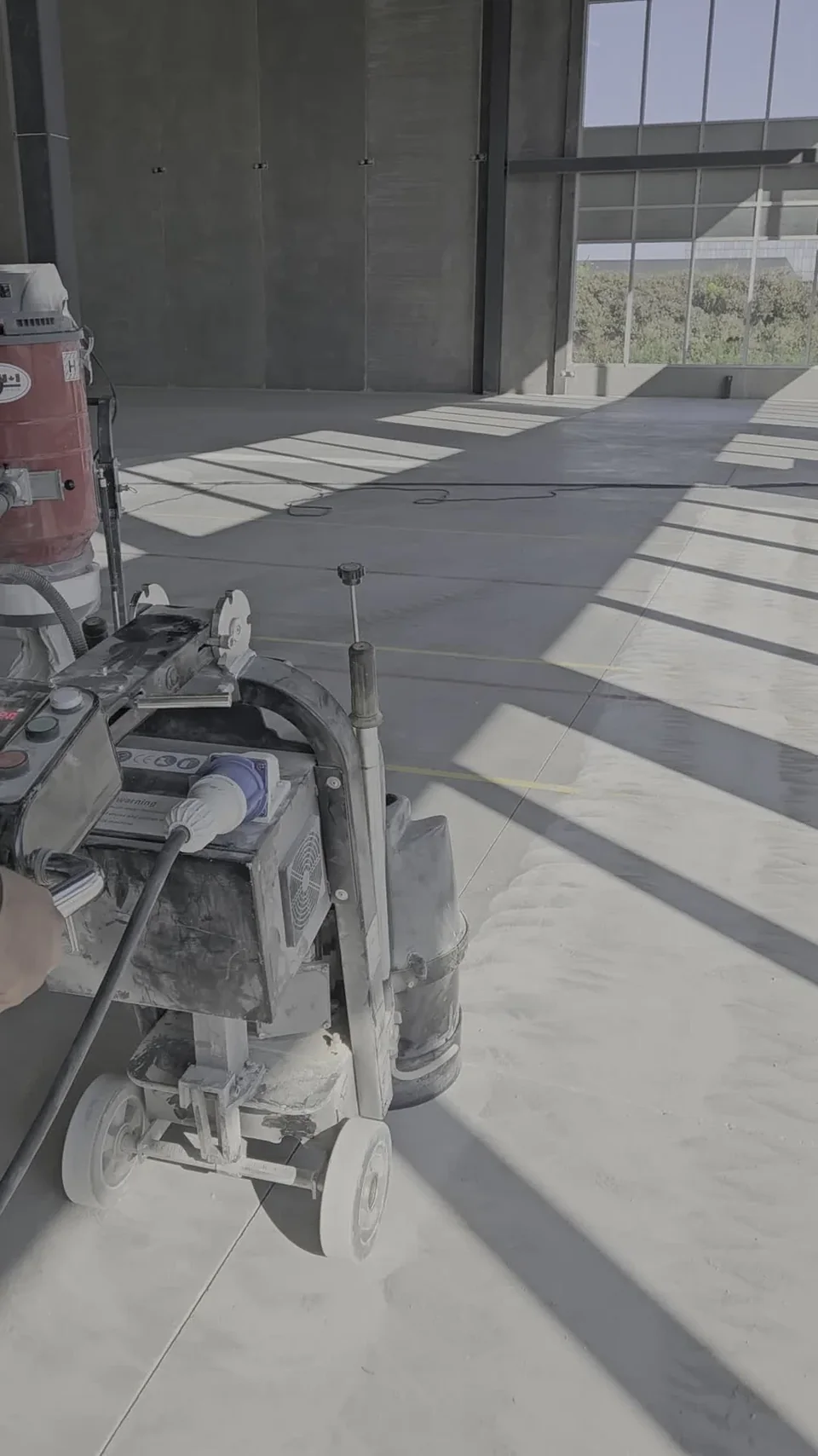
See The Vaughan Warehouse Project for the documented preparation, application and finished floor.
Worked Example: An Open Warehouse Bay
Imagine an empty bay with a large open slab, old coating patches and tight edges around columns and walls. Start by checking the coating specification and preparing a trial area. Confirm whether the old coating needs separate removal and which equipment can produce the specified texture on the open slab.
If shot blasting suits the open runs, use suitable edge tooling where the main machine cannot reach. Inspect the perimeter and transitions as well as the centre of the bay. Compare the prepared texture with the specified ICRI reference profile and check for dust, remaining coating and contamination before releasing the area for priming.
This is an illustrative example. The Vaughan photograph documents concrete preparation at that project. It does not establish a shot-blasting method or a measured surface profile.
Questions To Ask Before Comparing Quotes
- What surface profile is required for the specified system, and how will it be checked?
- Which existing coatings, high spots, damaged areas and perimeter details are included?
- How will dust and access be managed if the surrounding facility remains open?
Is One Method Always Better?
The choice depends on the system, substrate, access and required profile. The same job can use more than one preparation method.
Technical References
- ICRI Guide To Specifying Concrete Surface Preparation
- Sika Resinous Flooring Surface Preparation Guide
- Ontario Guidance On Controlling Silica