
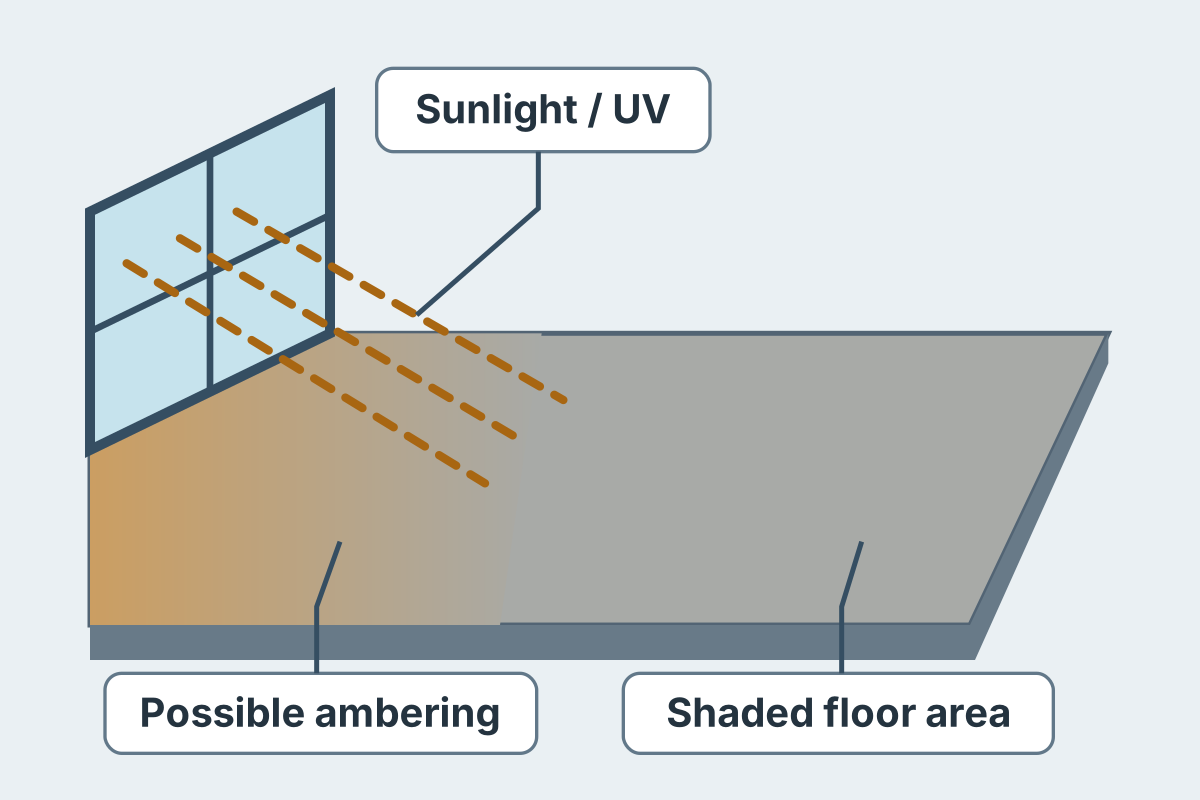
Why Sunlit Areas Can Turn Amber
Ultraviolet (UV) exposure can give some cured epoxy finishes a yellow or amber cast. The change is often easier to see on pale colours and where a sunlit area meets a shaded area.
The diagram shows two areas of the same floor after different levels of exposure. If a floor also has peeling, blisters or soft spots, have those symptoms assessed separately. See Why Resinous Floors Fail.
Commercial Example: A Showroom With Large Windows
A showroom wants one light-grey floor from the glazed storefront to the display area. The window strip gets direct daylight while the rear stays shaded. Mark the exposed area on the floor plan, then ask for a finish with documented colour stability under the expected exposure. Review a sample of the proposed system in daylight before approving the colour.
Residential Example: A Garage With An Open Door
A homeowner often leaves the overhead door open while working in the garage. Sunlight reaches the first few feet of a pale flake floor. Ask which topcoat the installer proposes and whether its data sheet supports that exposure. If the coating will extend onto the driveway apron, confirm separately that the specified system is suitable for outdoor use.
What To Check Before Choosing A Finish
- Identify recurring sunlight at windows, skylights and doors. Note any areas outside the building.
- Ask for the named products in the proposed system, including the exact topcoat. Check the manufacturer’s UV and exposure guidance for that product and assembly.
- Compare compatible finishes. Some polyurethane and polyaspartic products are formulated for better UV colour stability. Check the specific product and exposure conditions.
For the broader decision, see Choosing A Resinous Flooring System.
Technical References
- Epoxy Product Data On UV Exposure And Colour Stability
- Manufacturer Guidance On UV-Stable Flooring Finishes