
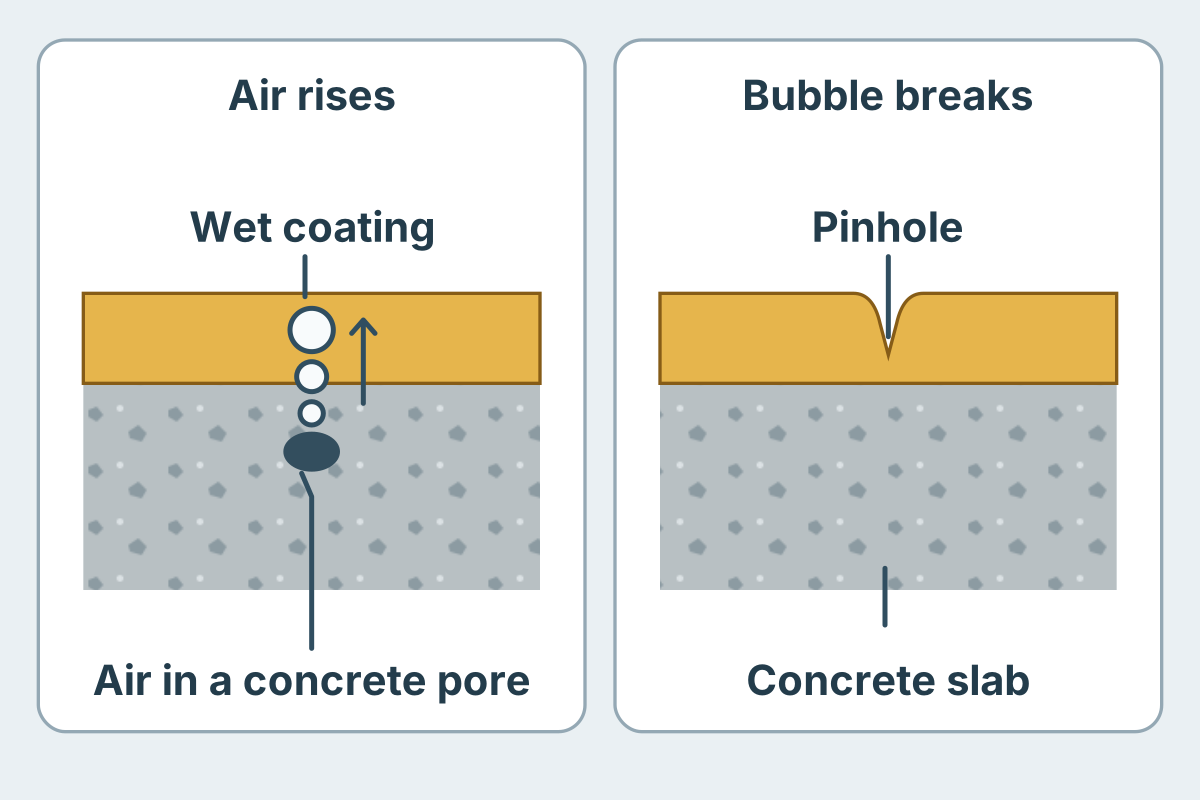
How Air Leaves A Pinhole
As porous concrete warms, air can escape from the slab into the wet coating. If a bubble breaks and the coating does not flow back over the opening before it sets, a small hole can remain.
The labelled cross-section shows a bubble rising on the left and the opening it can leave on the right. Pinholes alone do not establish the cause. Check when the openings appeared, where they are concentrated and how the coating was applied.
What The Crew Checks Before Coating
- Slab temperature trend. Take readings in the work area and near doors or sunlit edges. A reading within the allowed range can still be rising. Check what the product permits.
- Primer coverage. Confirm that the specified primer suits the prepared concrete and was applied at the required coverage. Ask how the system handles unusually porous areas.
- Application conditions. Check the manufacturer’s limits for temperature, humidity and dew point, as well as the specified substrate moisture test.
Worked Example: A Warehouse Loading Door
On a morning installation, the interior aisle stays at 18 °C. The slab beside the open loading door rises from 16 °C to 20 °C as sunlight reaches it. The selected coating’s instructions prohibit application during rising substrate temperatures.
The crew holds the door zone, checks primer coverage where the prepared concrete is more porous, and takes fresh readings before choosing a new application window. If small bubbles appear in a freshly coated area, the crew records where and when they appeared and checks the manufacturer’s instructions before deciding how to proceed.
How This Differs From Condensation
Outgassing in this example starts with air leaving pores in the concrete. Condensation starts when moisture from the surrounding air collects on a cold surface. See Dew Point And Condensation Before Coating and How To Read A Flooring Technical Data Sheet.
Technical References
- Manufacturer Troubleshooting Guide On Pinholes And Bubbling
- Example Product Instructions On Rising Temperatures