
Where Oil And Grease Can Remain
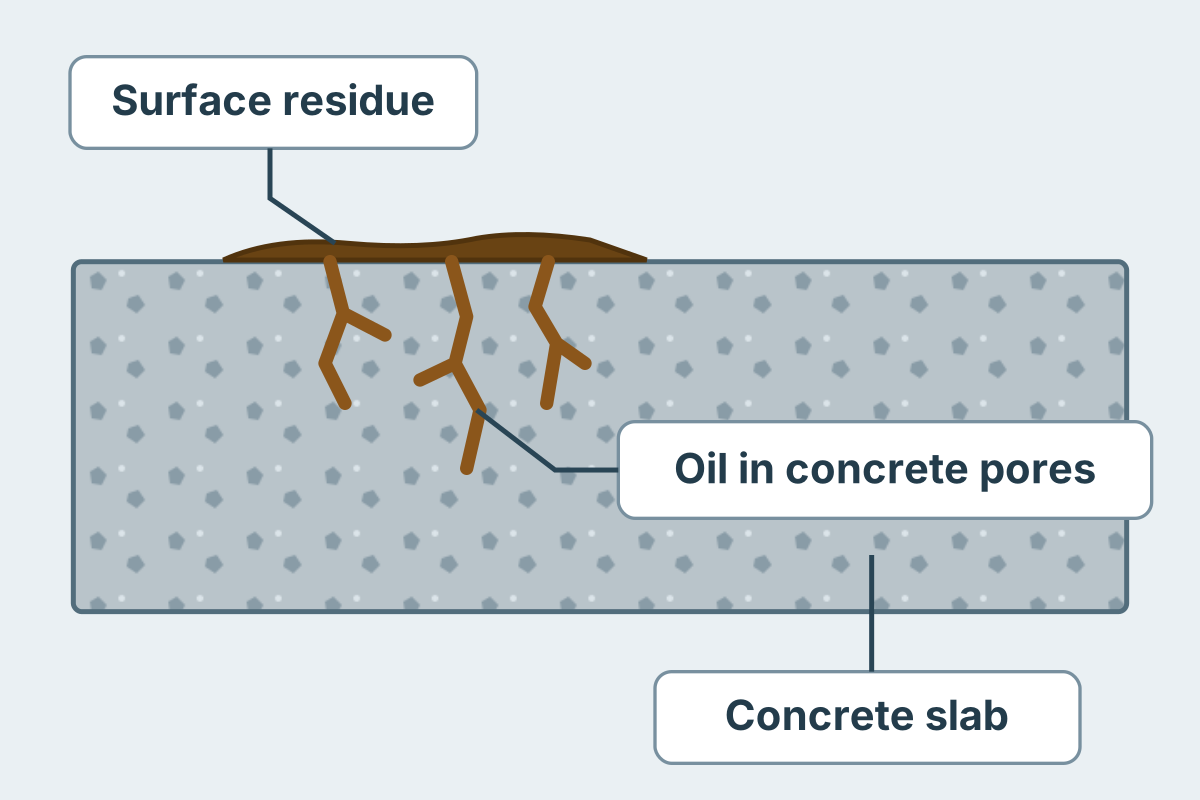
Oil and grease can interfere with a coating’s bond to concrete. A spill can leave residue on the surface and penetrate open pores. The appearance of a stain alone does not establish its depth or whether the surface is ready to coat.
The labelled cross-section shows surface residue and possible penetration into concrete. The paths are illustrative. Actual penetration varies with the slab and its spill history.
What The Installer Checks
- Spill history and location. Identify what was spilled, where leaks recur and which areas already have a coating. Address active leaks before preparing the slab.
- Cleaning and preparation. Remove surface oil and grease before mechanical preparation where the system instructions call for it. Plan how to collect the cleaning residue. If the surface is rinsed, let it dry and verify the specified substrate conditions before coating.
- Condition after preparation. Reassess the affected areas for remaining residue or contamination. If contamination persists below the prepared surface, discuss further removal or local repair with the installer and confirm the proposed approach with the system manufacturer.
Worked Example: An Automotive Service Bay
A shop wants to coat the concrete around a vehicle lift, where oil spills have occurred repeatedly. The aisle nearby has a different spill history. The installer maps the affected area, asks the shop to stop the leak, and plans cleaning and preparation around the lift separately from the aisle.
After cleaning and preparation, the installer reassesses the concrete near the lift. If residue remains or the prepared surface cannot meet the coating manufacturer’s requirements, that area stays on hold while the installer confirms the next preparation or repair step. The shop gets an updated scope before coating proceeds.
What To Include In The Scope
Record the areas affected, the agreed cleaning and preparation steps, and how any deeper contamination will be handled if discovered. See Grinding vs. Shot Blasting and Concrete Moisture Before Epoxy.
Technical References
- Manufacturer Guidance On Preparing Contaminated Concrete
- Manufacturer Example Covering Oil Removal Before Sanding