
What Happens After Mixing
In a two-part epoxy, mixing the resin and hardener starts a chemical reaction. The material gradually forms a solid network. A product’s working time, recoat window and full-cure time describe different stages of that process.
Use the specified mix ratio and mixing procedure. Once the components are mixed, the pot life clock starts under the conditions described in the product data. Follow the instructions for the named product when working with other resin chemistries.
Three Timing Terms To Know
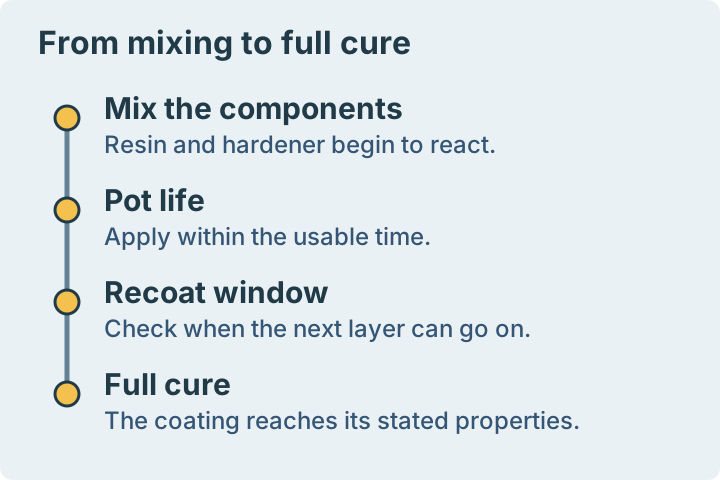
Read these three times separately in the technical data. The diagram shows the stages conceptually. The actual windows and how they overlap depend on the system.
- Pot life. The usable time for mixed material under stated conditions. Record when the batch was mixed. Follow the data sheet for batch size and temperature.
- Recoat window. The earliest and latest times for applying the next coat under stated conditions. If the window is missed, check the product instructions for any additional preparation.
- Full cure. The point at which the product reaches its stated cured properties under specified conditions. Ask separately when walking, vehicle traffic and cleaning can begin.
Worked Example: A Cooler Loading Bay
A crew plans a second coat the morning after applying the first. The slab near the overhead door is cooler than the interior. The installer records the conditions and checks the appropriate recoat window for the actual product before committing to the start time. If the surface is outside the specified conditions or the window has passed, the crew uses the product instructions to decide what needs to change.
At handover, the facility manager gets separate release times for walking, loaded forklifts and the first cleaning. See Cure Times And Return To Service for a worked reopening schedule.
Technical Reference
- Example Product Data For Pot Life, Overcoating And Cure