
The Short Answer
Ask the installer to identify the cracks and joints on your slab and describe how each will be treated. A written scope should tell you which areas will be repaired, which joints will be carried through the finish, and which conditions need more investigation.
Three Details To Recognize
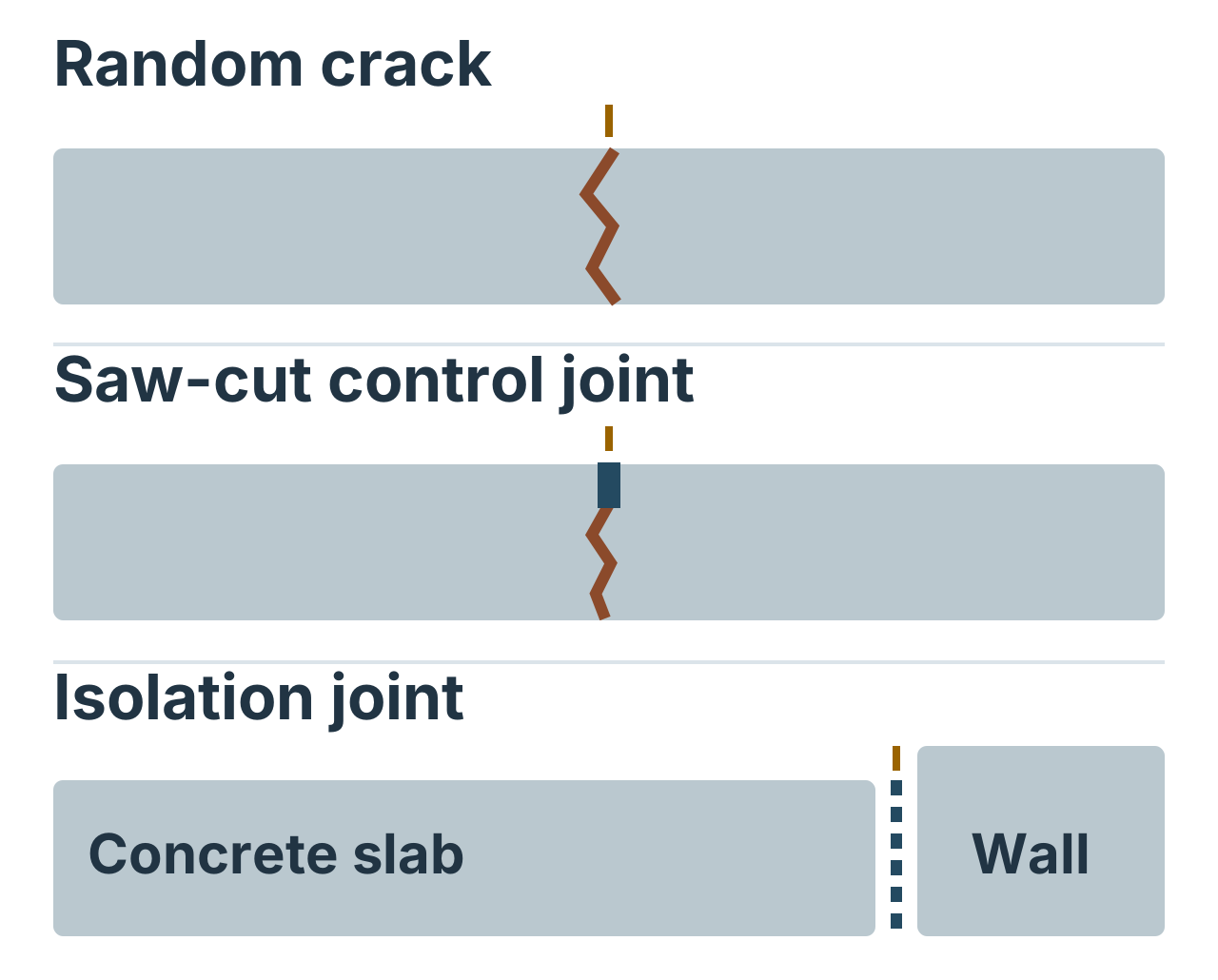
- Random crack. An irregular break in the slab. Ask how the contractor will assess moisture, displacement and signs of movement before selecting a repair.
- Saw-cut control joint. A planned groove that encourages shrinkage cracking to occur along that line. Ask what joint detail the installer proposes for the expected traffic.
- Isolation joint. A separation that lets adjacent elements move independently. Ask how movement will be accommodated in the finished floor and what the joint will look like.
Warehouse Example: A Joint Across A Forklift Aisle
A facility manager notices broken edges along a joint that forklifts cross every shift. Mark the joint on a floor plan and note the wheel loads, turning areas and hours when the aisle can be closed. Ask the installer to identify the joint type, check for movement or uneven slab edges, and assess how far the damaged concrete extends.
The written scope should explain any edge repair, the proposed joint detail and when loaded forklifts can return. If adjacent slab panels move under load, ask who will assess the slab before the coating work goes ahead.
Review Installation And Return To ServiceGarage Example: A Crack Across A Saw Cut
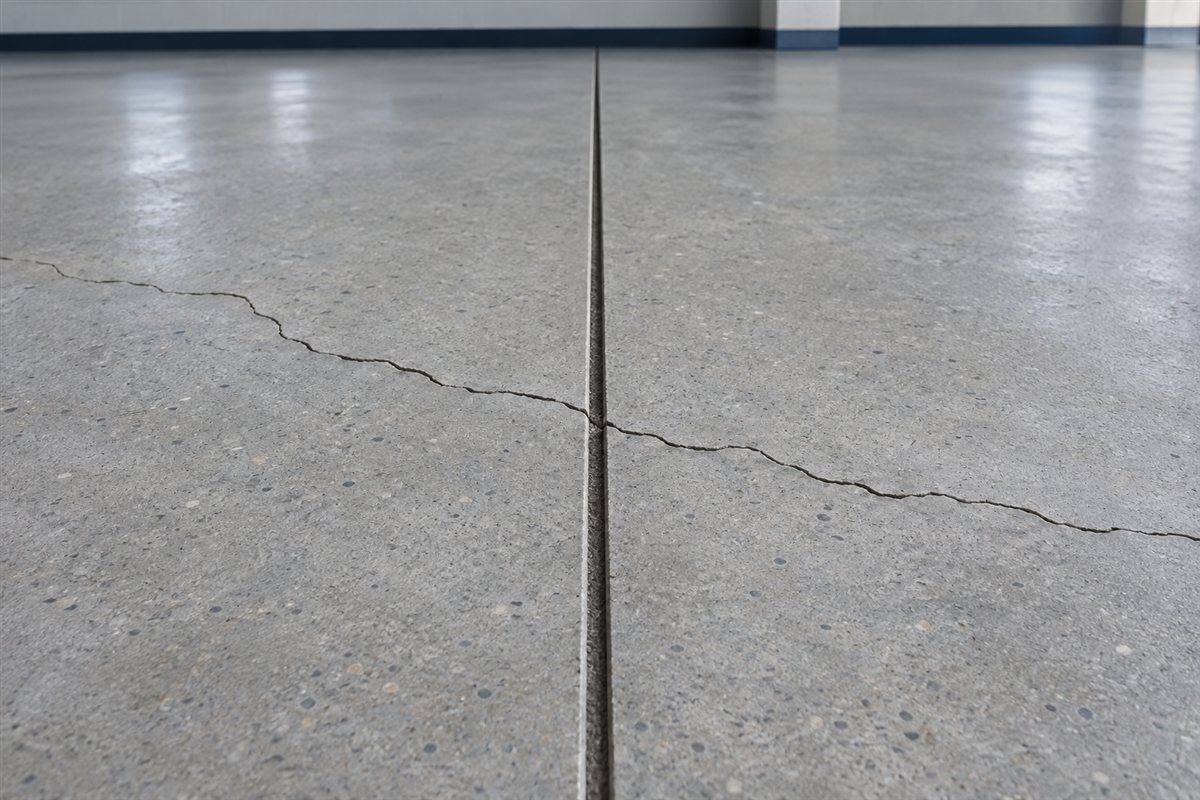
A homeowner sees a hairline crack running across a straight saw cut and toward the garage door. Photograph both lines, note whether either edge is raised, and tell the installer if water collects there after rain or snowmelt.
Ask the quote to identify the crack and saw cut separately. Have the installer explain the proposed treatment for each, which line will remain visible in the finished floor, and whether a changing crack or recurring water warrants further assessment before coating.
Review How Cracks Can Show Up After CoatingWhat To Ask For In Writing
- Which cracks and joints are included, and where are they located?
- What preparation, edge repair and materials are proposed for each detail?
- Which joints will remain visible, and how will the design accommodate expected movement?
- Who will assess any sign of slab movement, recurring water or uneven edges, and how could that affect the scope and schedule?
For the next step, review concrete surface preparation.
Technical References
- ACI Definitions Of Concrete Joint Types
- ACI Contractor’s Guide To Joints And Reinforcement
- ACI Concrete Floor And Slab Construction, Chapter 5