
The Short Answer
Start with the traffic, exposure and slab condition. Ask for the named system and its specified thickness, which layers are included in that number, and how the installer will verify it.
Compare Three Floor Builds
Simplified profiles. Thicknesses are exaggerated, with no universal minimum shown. Published build ranges and layer sequences vary by product and system.
What to look for: Compare the layers above the concrete. The thin film has a shallow resin layer, the high-build example has a separate body coat, and the resin mortar shows a thicker layer with aggregate mixed in.
View full-size diagram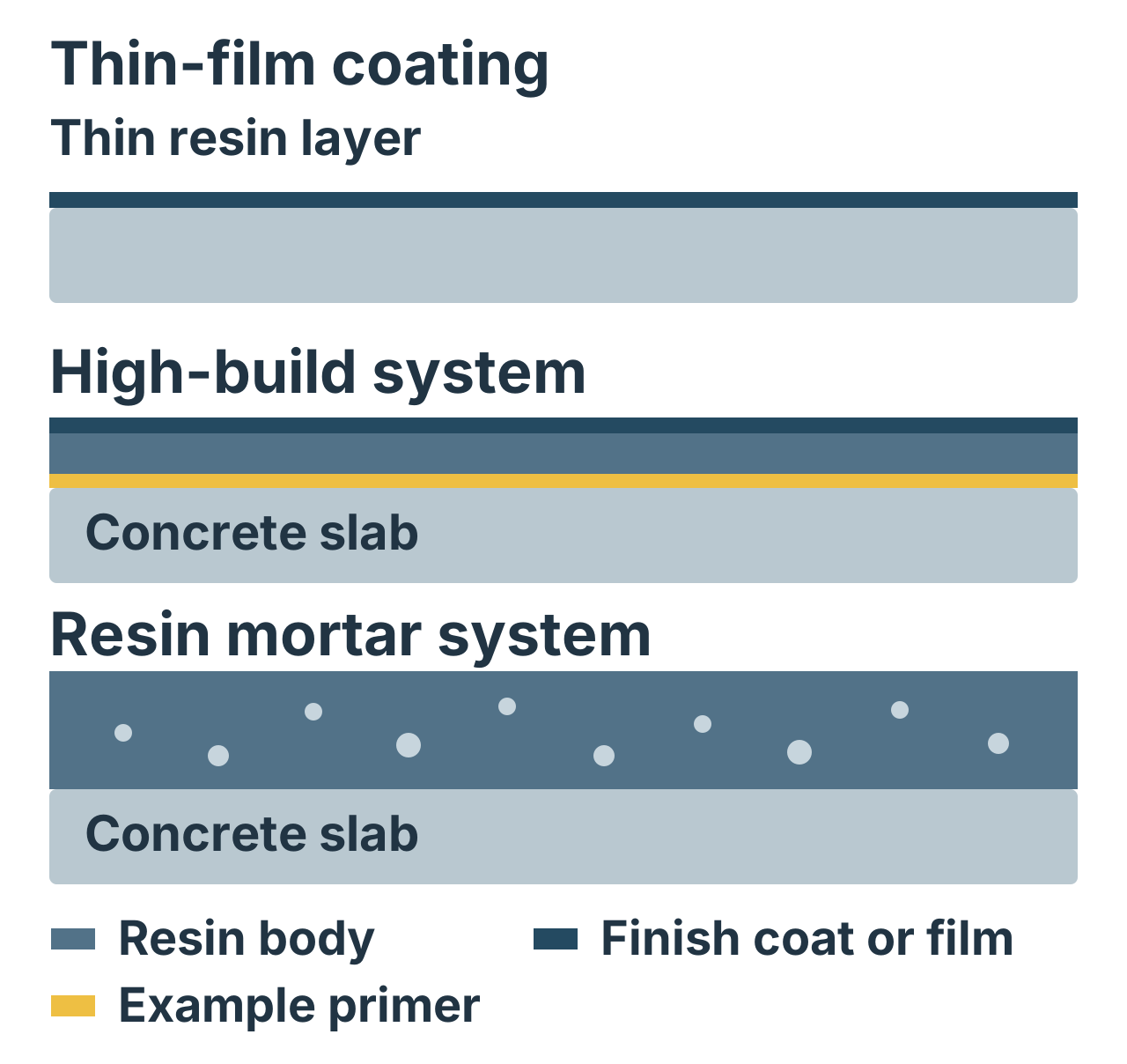
- Thin-film coating. A thinner resin layer over a prepared substrate. Check whether the system is suitable for the actual traffic and exposures.
- High-build system. A thicker coating assembly that can include a body coat and finish. Ask what each layer contributes and which are included in the specified build.
- Resin mortar system. A body of resin and aggregate. Review the product’s specified build, placement method and suitability for the loads and exposure.
What The Thickness Number Means
A mil is one-thousandth of an inch. Ask whether a value is in mils or millimetres, whether it refers to the wet film or the finished build, and whether it applies to one coat or the whole system. Ask whether local levelling, repairs and primer are counted in the quoted thickness.
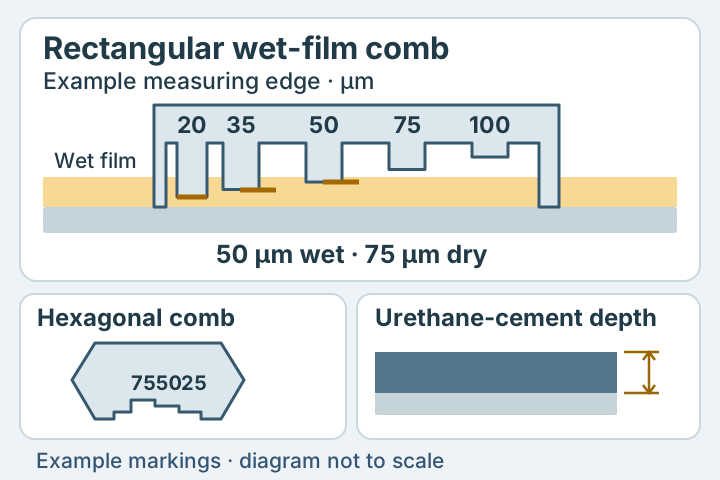
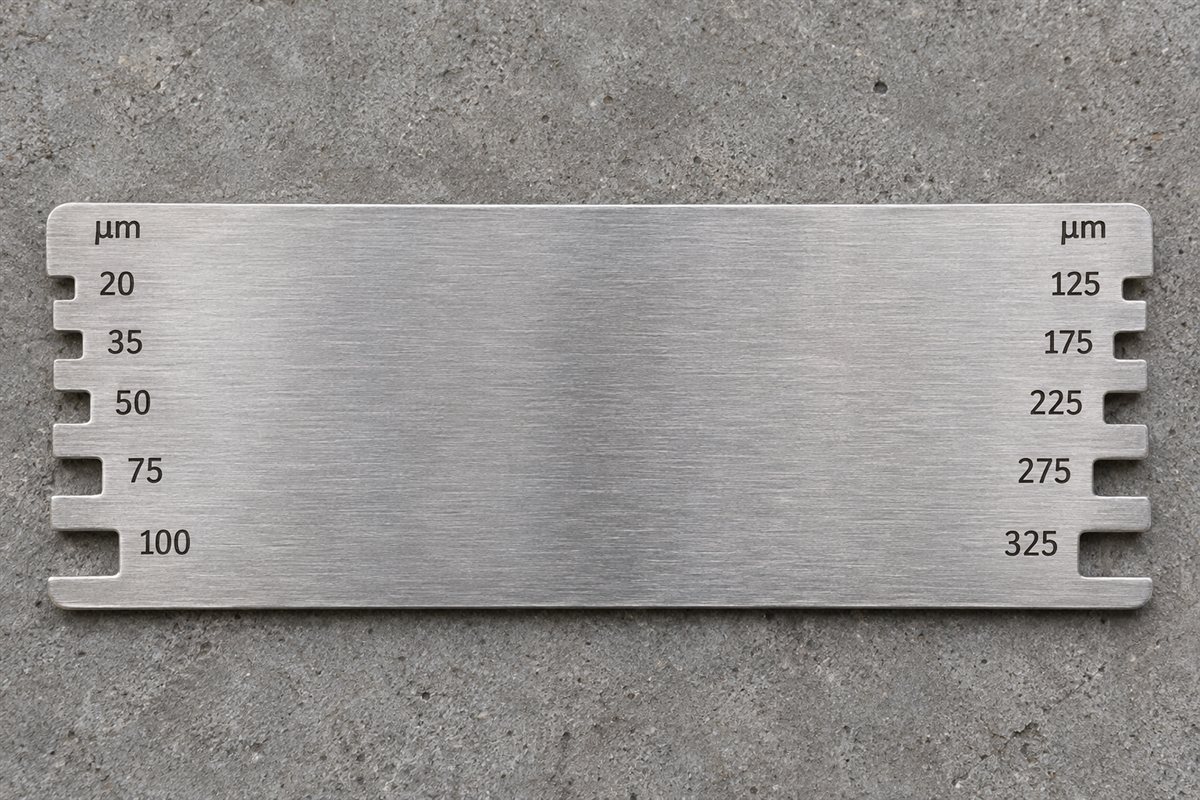
Ask how the contractor will document the build for that specific system. A wet-film comb checks a fresh coating layer. Rectangular and hexagonal combs have measuring teeth set at different distances from the surface, with a thickness value marked beside each measuring tooth. The outer feet rest on the substrate. Lift the comb and look for the largest value with coating on its tooth and the next higher value that stayed dry. If 50 µm is wet and 75 µm is dry, the wet-film thickness is approximately between those two values. ASTM D4414 describes this way of estimating wet-film thickness with a notched gauge. For a thicker trowelled mortar, ask about depth checks or screed settings and material usage against the installed area. Agree what gets recorded and how deviations will be addressed.
Scale example. One heavy-duty urethane-cement screed has a published application range of 6–9 mm. This range is specific to one published urethane-cement system. Ask for the range and verification method for the system in your quote.
Worked Example: Stockroom And Forklift Turning Lane
A facility needs a cleanable finish in a light-duty stockroom and at a turning lane used by loaded forklifts. In the stockroom, note foot traffic, hand carts and occasional spills. A thin-film proposal is worth reviewing if the slab is sound and the manufacturer’s documentation supports that use.
For the turning lane, record loaded traffic, turning frequency, impact, joint condition and existing wear. Ask the contractor to justify the proposed build against those conditions, including whether a high-build system or mortar assembly is suitable. Compare the layer schedule, joint treatment and vehicle release time for each zone. Ask for that scope in writing before comparing both prices.
What To Put In The Quote
- The named products and layers by zone, with specified thickness and consistent units.
- How repairs, joints and preparation are priced and whether thickness refers to one layer or the complete finished system.
- The proposed verification method and the records included at handover.
See Choosing A Resinous Flooring System and How To Compare Commercial Flooring Quotes to compare more than the thickness figure.
Technical References
- ASTM D4414 — Measurement Of Wet Film Thickness By Notch Gages
- Example Coating Product Data And Film Thickness
- Example Urethane-Cement Screed And Published 6–9 mm Build