Types Of Epoxy Resin And How To Choose One
Compare tabletop, casting and flooring epoxy resins and learn why pour depth, cure conditions and product compatibility matter.
Tabletop, deep-pour and flooring epoxies are formulated for different jobs. Check the product’s approved use, maximum layer or pour depth, mixing ratio and working temperature. For ventilation and protective equipment, follow the product safety data sheet.
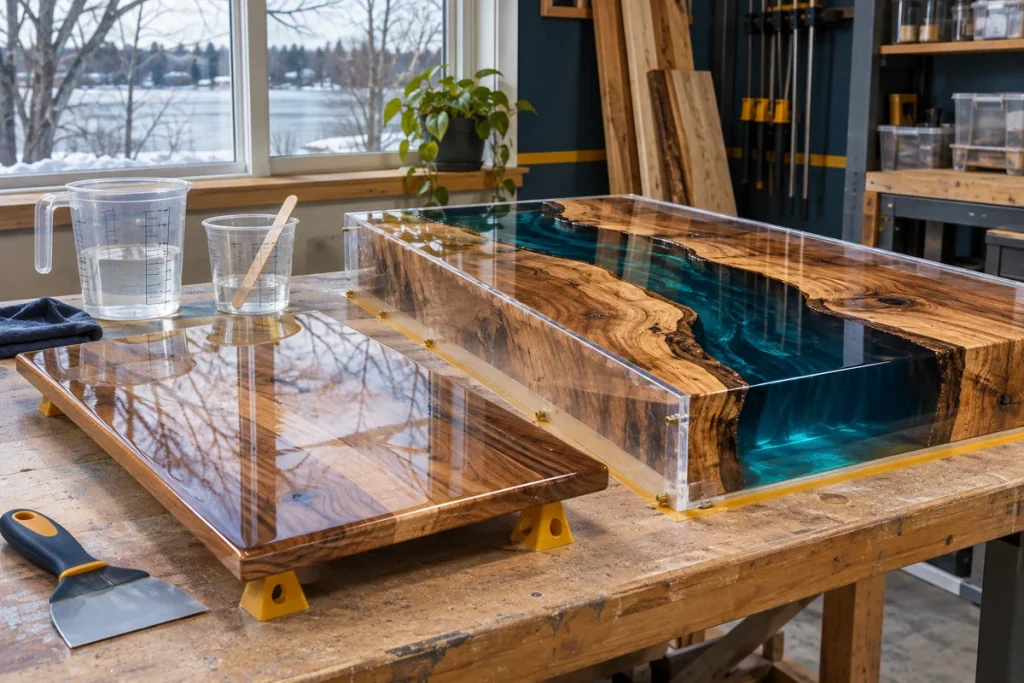
- Surface coatA thin decorative layer over a compatible surface.
- CastingA pour inside a mould or cavity.
- Concrete floorA specified system built for traffic and exposure.
Performance depends on the formulation and how it is mixed and cured. Staying within the product’s specified pour depth helps manage heat and reduce the risk of defects.
Thin “tabletop” resins are made for coatings and bar tops slow curing “deep pour” resins are made for thick castings. Choosing the right one comes down to pour depth, cure time, UV exposure and the temperature of your workspace.
What Is Epoxy Resin And How Does It Work
Epoxy resin is a thermosetting polymer system that transforms from a liquid state into a rigid solid through a controlled chemical reaction.
This transformation happens when the base resin is mixed with a specialized hardener in precise ratios specified by the manufacturer.
Performance depends on the formulation and how it is mixed and cured. Staying within the product’s specified pour depth helps manage heat and reduce the risk of defects.
Chemical Composition And Curing Dynamics
The curing process involves exothermic crosslinking where polymer chains bond together to form a dense and permanent matrix.
Controlling ambient temperature and humidity during this chemical phase is critical to ensure proper surface hardness and clarity.
Variations in room temperature directly alter the working time and viscosity of the resin mixture during preparation.
Winter Working Conditions In Canadian Workshops
Cold Canadian winters demand careful temperature management inside workshops to prevent incomplete curing or amine blush issues.
Check the technical data sheet for acceptable room, substrate and material temperatures. Follow the manufacturer’s handling instructions for cold materials.
Safety Protocols And PPE Requirements
Follow the safety data sheet for each component. Check the required ventilation, gloves, eye protection and any respiratory protection before mixing or applying the product.
Avoiding direct skin contact with uncured chemical components maintains a safe and productive crafting environment.
Comprehensive Comparison Of Epoxy Resin Types
Choosing between different formulations depends on the intended thickness, UV resistance, and final appearance of your project.
Different resin variants cater to specific technical requirements ranging from thin coating layers to massive deep pour castings.
Tabletop Resin Versus Deep Pour Casting Resin
Tabletop resin is engineered for thin coats on wooden bars, tabletops, and artwork with rapid surface leveling properties.
Deep-pour formulations can help manage heat within their specified depth and volume limits.
Performance depends on the formulation and how it is mixed and cured. Staying within the product’s specified pour depth helps manage heat and reduce the risk of defects.
Pigments And Additives For Creative Customization
Adding mica powders, liquid pigments, or metallic tints transforms clear resin into vibrant artistic masterpieces.
Use only colourants and loading rates the resin manufacturer lists as compatible.
Comparison Table Of Epoxy Resin Categories And Applications
| Material | Common use | What to check |
|---|---|---|
| Tabletop resin | Thin surface coats | Per-coat thickness, recoat window and cure before use |
| Deep-pour casting resin | River tables and larger castings | Maximum depth and mixed volume for the mould size |
| Art casting resin | Small moulds, trays and decorative pieces | Mould dimensions, pigment compatibility and demould time |
Choosing The Right Epoxy Resin For Your Project
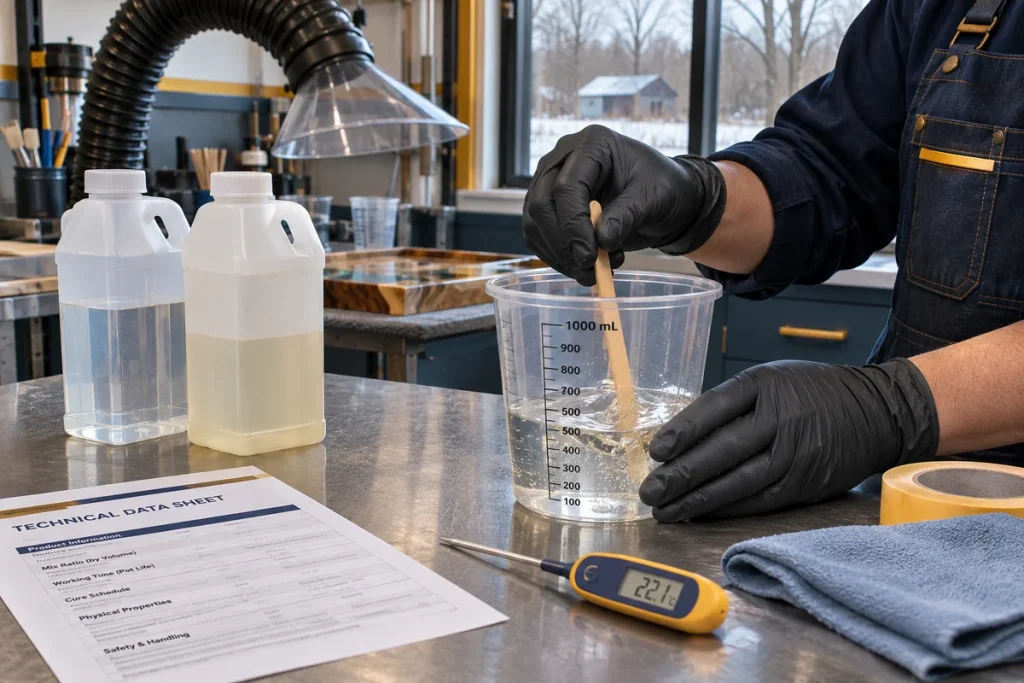
Start from the job, not the product: measure the pour depth, check how much UV the piece will see, and confirm the temperature you can hold during the cure.
Read the manufacturer’s technical data sheet for mix ratio, maximum pour depth and recoat window, and pick formulas with clear VOC and safety information for indoor use.
Epoxy For Countertops, Floors And Large Surfaces
Small art pieces and river tables suit hobby kits.
Countertops and floors are a different scale: they need substrate preparation, moisture testing and the right system for the traffic they will take.
See our guide to countertop epoxy, learn what epoxy flooring is made of, and compare the different types of epoxy flooring.
Work With A Local Epoxy Contractor
Epoxology installs epoxy flooring for homes and businesses across Southern Ontario.
For garage, basement or commercial floors, contact our team for an on site assessment and a written quote.
A Countertop And A Casting Need Different Specifications
Suppose you want a thin clear coat over a laminate countertop and also want to fill a deep recess in a wooden table. For the counter, look for a coating rated for the substrate and check edge treatment, heat limits and time before use. For the recess, measure depth and approximate volume, then check both against the casting resin’s limits. A wide pour and a small mould can retain heat differently even at the same depth.
Why Flooring Epoxy Is Its Own Decision
For a concrete floor, first determine how the room is used and whether the slab needs repairs, profiling or moisture mitigation. Ask for the layers and how they work together. A flooring system may use an epoxy build coat with a different finish coat. For countertop-specific preparation and care, see the linked countertop guide.
What To Record Before Mixing
Keep the technical and safety sheets nearby. Confirm whether the mix ratio is by weight or volume, the temperature range, the working time under your conditions and the cure requirements for the intended use. Record when mixing began so you can track the product’s working window.
Technical references tabletop and casting
Epoxology Canada assesses installed concrete flooring. Use the form below for a flooring project.
 Elegance Meets Durability
Discuss Your Flooring Project
Have a question about flooring for your commercial facility, industrial workspace or home garage? Share your location, floor condition, approximate area and intended use so we can discuss suitable options.
+1 (905) 840-8405
sales@epoxology.ca
Any applicable warranty and its conditions are stated in your written project agreement. View flooring warranty details.