What Is Epoxy Flooring Made Of?
Explore epoxy resin, hardeners, pigments, flakes and aggregates, and learn how they contribute to a finished epoxy floor.
The two core ingredients are epoxy resin and a compatible hardener. Pigments provide colour, while decorative flakes, quartz or other aggregates may be added as part of the system. Mixing, handling and re-entry requirements depend on the products being used.
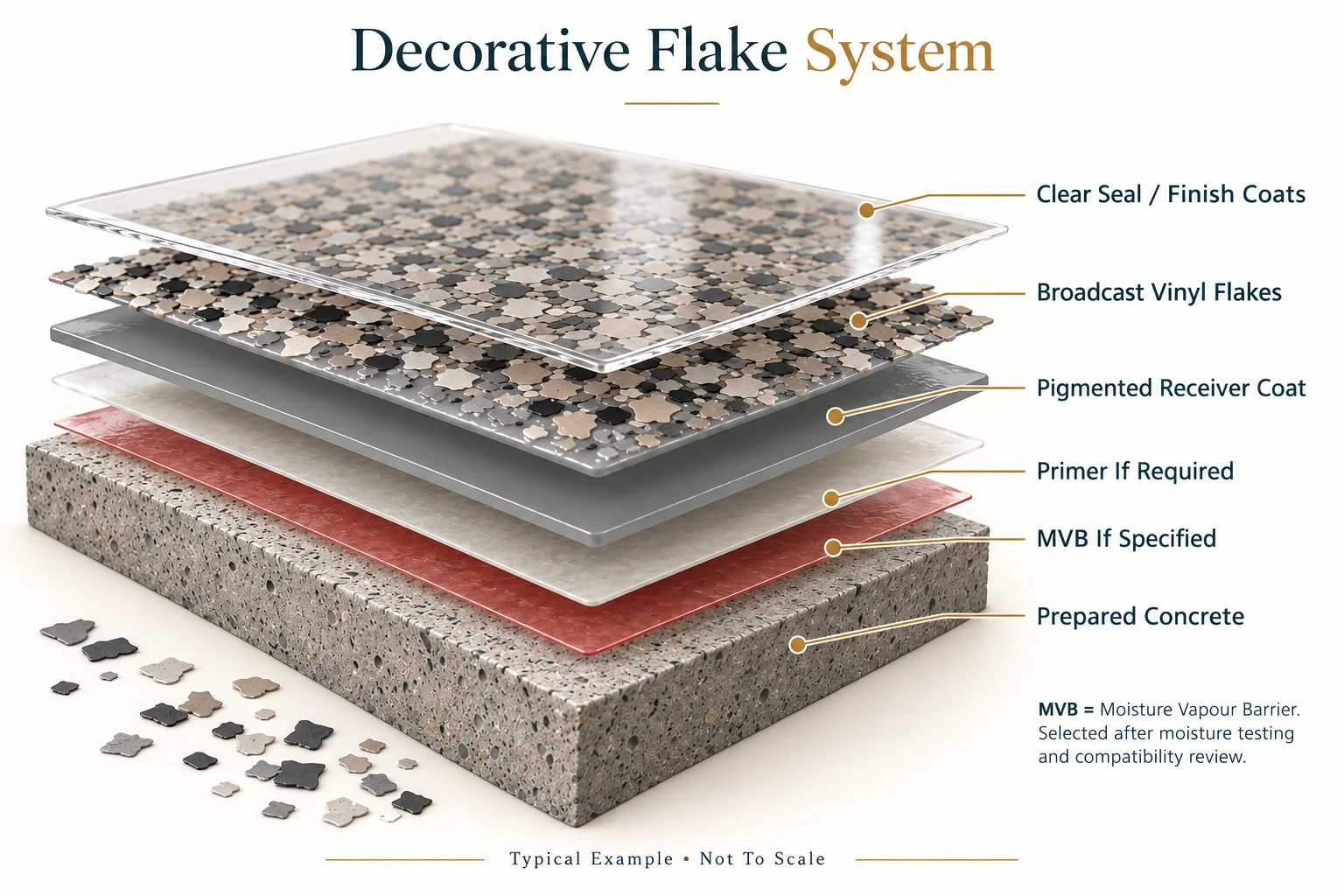
A Typical Coating Build
- Prepared concrete forms the substrate.
- A specified primer supports adhesion. A moisture mitigation layer may be required for some slabs.
- The epoxy build coat uses resin and hardener. Decorative flake or aggregate can be added where specified.
- A compatible topcoat may be selected for cleaning, wear or exposure.
Epoxy flooring is widely used in residential garages, commercial buildings, and industrial facilities because it forms a strong, seamless surface that resists wear, chemicals, moisture, and heavy traffic.
Understanding its composition helps explain why epoxy flooring delivers exceptional performance and long-term value across a wide range of applications.
Epoxy flooring is primarily made of epoxy resin and a hardener.
When these two components are mixed together, they undergo a chemical reaction known as curing, forming a rigid, durable material that bonds tightly to prepared concrete.
Unlike standard floor paint, epoxy becomes part of the concrete surface rather than simply covering it.
This chemical bond creates a seamless coating capable of withstanding demanding residential, commercial, and industrial environments.
Experienced garage epoxy flooring contractors use premium epoxy materials and proper surface preparation to create durable garage floors that withstand years of daily use.
The Two Main Components Of Epoxy Flooring
Understanding the ingredients helps explain why epoxy flooring performs so well.
Epoxy Resin
Epoxy resin is the primary material that forms the coating. It provides:
- Strong adhesion to concrete
- Excellent durability
- Chemical resistance
- Moisture protection
- A smooth, seamless finish
The resin is responsible for creating the protective layer that shields concrete from damage.
Discover: What Are the Different Types of Epoxy Flooring
Hardener
The hardener activates the curing process.
Once mixed with the resin in the correct ratio, it transforms the liquid mixture into a solid, high strength flooring system.
Without the hardener, epoxy would never fully cure or achieve its exceptional durability.
Additional Materials Used In Epoxy Flooring Systems
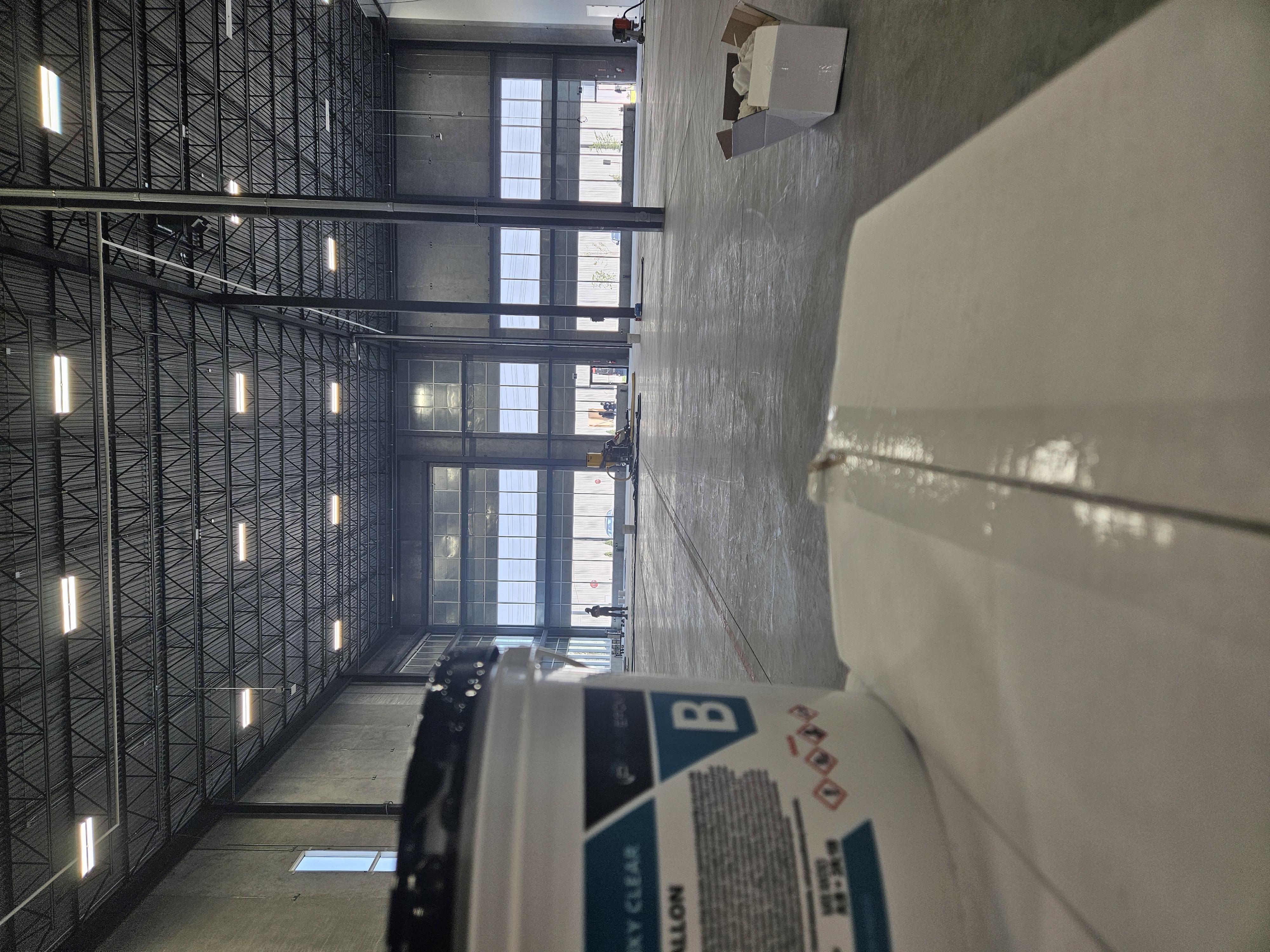
Many epoxy flooring systems include additional materials to improve performance or appearance.
These may include:
- Decorative vinyl flakes
- Colored quartz aggregates
- Metallic pigments
- Silica sand
- Anti-slip additives
- UV-resistant topcoats
- Clear protective sealers
Each additive is selected based on the intended application and performance requirements.
You may like to know: What Flooring Is Better Than Epoxy
How Epoxy Flooring Becomes So Strong
The strength of epoxy flooring comes from its chemical curing process.
After the resin and hardener are mixed, they form a cross-linked molecular structure that creates an extremely hard surface bonded directly to the concrete.
The cured coating can protect the concrete surface from wear. Structural cracks and slab movement need separate assessment.
- Heavy traffic
- Vehicle loads
- Chemical spills
- Moisture
- Abrasion
- Impact
This unique chemical reaction is what distinguishes epoxy flooring from ordinary paints and coatings.
Professional epoxy flake flooring contractors incorporate decorative vinyl flakes into epoxy systems to improve appearance, slip resistance, and durability in residential and commercial spaces.
Why Material Quality Matters
Not all epoxy products are manufactured to the same standard.
High quality commercial and industrial epoxy systems generally contain higher solid content and premium raw materials, resulting in:
- Better adhesion
- Longer lifespan
- Improved chemical resistance
- Greater abrasion resistance
- Enhanced overall durability
Choosing professional-grade materials helps maximize the long-term value of your flooring investment.
Where Epoxy Flooring Materials Are Used
Because of its unique composition, epoxy flooring is suitable for numerous environments.
Common applications include:
- Residential garages
- Commercial offices
- Retail stores
- Warehouses
- Manufacturing facilities
- Distribution centers
- Automotive service shops
- Healthcare facilities
- Educational buildings
Each environment benefits from epoxy’s strength, easy maintenance, and protective properties.
Our commercial flooring systems are engineered using premium epoxy materials that provide long-lasting durability, seamless protection, and a professional appearance for businesses of all sizes.
Is Epoxy Flooring Safe?
Once fully cured, epoxy flooring becomes an inert, stable surface that is safe for residential, commercial, and industrial use.
Professional installers also follow proper mixing ratios, ventilation requirements, and curing procedures to ensure optimal performance and safety throughout the installation process.
A continuous finish can be easier to wipe clean. Use the cleaning or sanitation procedure appropriate to the surface and how the space is used.
Why Professional Installation Matters
Even the highest quality materials will not perform properly without expert installation.
Professional installers ensure:
- Correct mixing ratios
- Proper concrete preparation
- Moisture testing
- Surface repairs
- Correct application thickness
- Controlled curing conditions
These steps allow the epoxy materials to develop maximum strength and long-term durability.
Experienced industrial epoxy flooring contractors install heavy duty epoxy systems using premium materials engineered for factories, warehouses, and demanding production environments.
Why Choose Epoxology Canada for Professional Epoxy Flooring Contractors?
The quality of an epoxy floor depends on both the materials used and the expertise of the installation team. At Epoxology Canada, our experienced epoxy flooring contractors use premium-grade epoxy products combined with meticulous concrete preparation to deliver flooring systems built for lasting performance.
Whether you need flooring for a residential garage, commercial building, warehouse, or industrial facility, we provide customized epoxy solutions tailored to your property’s unique requirements.
Our commitment to quality craftsmanship, reliable materials, and attention to detail ensures your investment delivers years of dependable service.
What To Ask About Primer And Moisture Control
Ask how slab moisture was assessed and which layer provides adhesion or moisture control. Some specified products can perform both roles. The coating manufacturer’s system instructions determine whether a separate primer is required.
Frequently Asked Questions
What Is Epoxy Flooring Made Of?
Epoxy flooring is made of epoxy resin and a hardener, which chemically react to form a strong, durable surface bonded to concrete.
Is Epoxy Flooring Made From Plastic? No!
Yes. Cured epoxy is a thermosetting polymer formed by the reaction between resin and hardener.
Why Is Epoxy Flooring So Durable?
Its durability comes from the cross linked chemical structure formed during curing, creating excellent resistance to wear, chemicals, moisture, and impact.
Can Different Materials Be Added To Epoxy Flooring?
Yes. Decorative flakes, quartz aggregates, metallic pigments, anti slip additives, and protective topcoats can all be incorporated depending on the desired finish and performance.
Does The Quality Of Epoxy Materials Matter?
Check the proposed system’s published chemical and wear data against the specific substances, concentrations, exposure times and traffic expected on site.
Technical references waterproofing · flooring performance
 Elegance Meets Durability
Discuss Your Flooring Project
Have a question about flooring for your commercial facility, industrial workspace or home garage? Share your location, floor condition, approximate area and intended use so we can discuss suitable options.
+1 (905) 840-8405
sales@epoxology.ca
Any applicable warranty and its conditions are stated in your written project agreement. View flooring warranty details.